Tampilkan postingan dengan label an. Tampilkan semua postingan

Rabu, 11 Mei 2016


Last Saturday, before the onset of the snow, I visited the wonderful Emma Bond and her lovely husband Tom in the beautiful city of Bath. Bath is an amazing place with lots of independent shops and restaurants, not to mention the amazing Botanical Gardens, Bath Abbey and the Roman Baths.  However it was at the Victoria Art Gallery that I found the most amazing sculpture exhibition.
A long time ago, in almost another lifetime, I graduated with a degree in Fine Art. Ive never lost my interest in art and I consider what I do, growing plants, to be just as creative as making art. Quietly Ive watched to art world from afar and have always loved the colour and textures created by artists of all disciplines. So I was extremely excited when Emma dragged me out of the snow and into the Victoria Art Gallery to see an exhibition by the sculptor, Peter Burke. And it was incredible. The sculptures are made from soil from the area surrounding Peters home in Bradford-upon-Avon in Somerset, bonded so it can be used as a medium for artwork. The first thing and the most amazing to me, was the  difference in the colour of the soil from different places.
The Cup Series

The above three images are identical in terms of the image and the only difference is the colour of the soil.
Radius in Chalk
The above image is made of chalk  from the Bradford-upon-Avon area. 
Whereas this image which is exactly the same in terms of its design, is made from an iron rich clay type soil from a different part of the Bradford-upon-Avon area. Both are stunning images and yet they are quite different although the same, and this difference is created, essentially, by colour. 

But this set me to thinking. It isnt colour that changes these images, but soil. Soil, the most important thing that as gardeners we can have. Its the absolutely most important thing to us and we spend our days trying to improve what we have, adding organic matter, feed, minerals, to ensure that we have the best growing media for our plants. But what this exhibition showed me was that essentially, soil will always return to its natural state and that is the state it was in before man tried to change it for his own needs.

This intrigued the artist in me and made me think about how I could add on to this with a work or works of my own and this is what I came up with. I would like a soil sample from as many people as possible, enough to fill a 3"pot would be ideal. Just soil, as pure as you can find it. Each pot will have a seed placed into it and photographed every day and it will become an installation work, recorded photographically and documented here.

If youd like to contribute or take part please feel free to contact me.
sara@thephysicgarden.co.uk

In other news I officially dislike snow immensely, particularly when all the leaves that had started to germinate for the 52 Week Salad Challenge turn to mush because of it! Enough said on that matter I feel but I promise my next post will be plant/gardening related!!


Read More..

Selasa, 10 Mei 2016

I checked out the system this week, and it seems to be doing well.  The brown algae in the water is slowly disappearing.  The veggies are growing well, though the strawberry seeds that I scattered in one pot don’t seem to be growing too quickly.  My friend hadn’t checked the chemicals recently, so I did while I was there.  The pH was very low (<6), but everything else looked ok.  The ammonia was 0.5ppm.  Nitrite was zero, and Nitrate was 160+ ppm.


I added 6 capfuls of API’s pH up.  I decided that I didn’t want to rely on my friend checking the pH and adjusting, so I added enough pH up to bump up the pH to around 7.  Normally I wouldn’t want to raise it more than 0.2 per day, but I didn’t want to risk losing the bacteria and have to re-cycle the system.  My friend added a little water the next day, and checked the pH.  It was about 7 – 7.2, which is ideal.  Hopefully this weekend I can visit for a few hours to clean the canister filter, and plan out new fish that we want to put in the fish tank.  We’d also like to mount some small lights that we have onto chains above the grow bed.  Another issue is that the water draining is somewhat loud, so I want to figure out a way to muffle the draining water.  Here’s some pictures and a video from my visit to the system.


Read More..

Jumat, 06 Mei 2016

It’s been quite a while since my last update, and I’ve had a lot of developments, so here we go!

The AquaFarm from Back to the Roots had been making a decent amount of noise as the air pump rattles against the plastic container.  I tried to adjust the foam insulation pad, but it was difficult to keep the thing quiet.  I was away from my apartment during my trip to Burning Man, so I moved the betta into a different tank and had a friend take care of him for me.  The wheatgrass grew well, but the basil and other herb didn’t grow very well.  Right now the system is empty, and I’m planning on starting it up again in the next few weeks.


The 105 gallon system at my friend’s apartment is still slowly moving forward.  My friend is taking a trip to Nepal, so his room got a new owner.  My buddy Saqib is going to look after the aquaponics system from now on, and I’m glad that he’s excited about it.  The seed plugs (coco coir, I think) started developing a white mold, so I broke off the plugs and planted the seedlings directly into my grow media.  I also installed a drain plug into my bell siphon to keep rocks from messing up the drainage cycle.  Pogo had bought 6 full grown tilapia for the fish tank before I left for Burning Man, but only one is still living.  I would have preferred to start with fingerlings, but one large tilapia will do fine for now.  His name is Hercules.  I think Saqib and I are on the same page, and want to eat Hercules and fill the tank with smaller, decorative fish.  I also want to cover the sides of the system’s frame with cloth to keep sunlight out of the filter and fish tank.  Some algae grew inside the filter, that I need to clean out, so hopefully the lack of sunlight will fix that in the future.  The pH seems to be slowly, but consistently dropping, so I’ve had to add pH up a few times.  I’m not sure what’s causing the pH drop, yet.  We’re working out the little kinks in the system, so I’m excited to see how it works out.  I’ll update when we have some new developments!
Read More..

Kamis, 05 Mei 2016

 Astaxanthin


President & CEO of CCRES


 Astaxanthin

Astaxanthin, a member of the carotenoid family, it is a dark red pigment and the main carotenoid found in algae and aquatic animals. It is responsible for the red/pink coloration of crustaceans, shellfish, and the flesh of salmonoids. CCRES produces astaxanthin from the microalga Haematococcus pluvialis, the richest known natural source for astaxanthin.
Astaxanthin however, is more than just a red pigment, it is primarily an extremely powerful antioxidant. It has the unique capacity to quench free radicals and reactive species of oxygen and to inhibit lipid peroxidation. Studies have shown astaxanthin to be over 500 times stronger than vitamin E and much more potent than other carotenoids such as lutein, lycopene and ?-carotene.
Astaxanthin was found to have beneficial effects in many health conditions related to the Central Nervous System (CNS) disorders, skin health, joint health, muscle endurance, as well as to the cardiovascular, immune, eye and other systems.

Natural astaxanthin – molecule properties


Astaxanthin (3,3’-dihydroxy-?-?-carotene-4,4’-dione) is a xanthophyll  carotenoid,  commonly found in marine environments where it gives an orange-pink coloration to several sea-species.


CCRES  Haematococcus pluvialis

Astaxanthin has two chiral centers, at the 3 and 3 positions. The main astaxanthin stereoisomer (3S, 3S’) found in the microalga Haematococcus pluvialis is the main form found in wild salmon.


CCRES  Haematococcus pluvialis

 Astaxanthin consists of geometric isomers (trans and cis). the cis isomers display higher bioavailability and potency in humans This isomer is abundant (up to 20%) in the natural astaxanthin complex produced by the microalga Haematococcus pluvialis.


CCRES  Haematococcus pluvialis

The astaxanthin in Haematococcus pluvialis microalgae occurs in the esterified form, which is more stable than the free astaxanthin form.


CCRES  Haematococcus pluvialis

Astaxanthin cannot be synthesized by animals and humans and must be provided in the diet. Natural astaxanthin has been part of the human diet for thousands of years.


 CCRES  Haematococcus pluvialis


Astaxanthin, unlike most carotenes is not converted to vitamin A (retinol) in the human body.


CCRES  Haematococcus pluvialis 

Natural astaxanthin has no "pro-oxidant" activity – It does not become an exhausted oxidant thanks to its unique molecule structure that is able to release the excess of energy as heat.


CCRES  Haematococcus pluvialis

 Astaxanthin has been shown to actually cross the blood-brain and blood-retina barriers, meaning it can positively impact disorders related to brain and the central nervous system. 
 
 Astaxanthin


CCRES ALGAE PROJECT
part of 
CROATIAN CENTER of RENEWABLE ENERGY SOURCES (CCRES)
Read More..

Rabu, 04 Mei 2016

There has been much talk recently of the gardening world becoming stagnant, dreary and dull. Of the need for a call to arms, a messiah, as discussed by Lucy Masters in her thinkinGardens piece http://thinkingardens.co.uk/articles/gardening-in-the-wilderness-do-we-need-a-revolution-in-the-garden-by-lucy-masters/. There is fear that garden writing in book form is struggling with Mr Hessayon announcing his probable retirement at the Garden Media Guild Awards, claiming that the internet would be the end of the garden D.I.Y book, and there is the constant fear that with so few young people coming into the horticultural industry as a serious career choice, that soon we will have no trained plantsmen or scientists to carry on the tradition that is horticulture in the U.K.
All this got me thinking. Thinking very seriously about the world that I am immensely proud to be a part of. An industry that is full of people who work ridiculously hard, in all weathers, to keep the British tradition of horticulture alive. These people are all full of passion and excitement for what they do, excited by new plants they have bred, new nutrient sources they are working on or new gardens they are designing and creating, and it is that passion that keeps them forging forwards in times of hardship.
It is very interesting when talking to people about gardening, just what an emotive subject it is, and why it is that emotive. For many, professional or amateur(and I use amateur very loosely as there are some incredible gardens out there that are not made by professionals but are just as great, if not better than a garden designed by a professional)gardening is their reason for being. Watching the progression of the seasons, planting a seed and watching it grow, creating a wonderful space grow, bloom and die back again in readiness for the following season, brings an awareness of time and seasonality that many struggle to see in their busy 21st century lives. Growing food, allotments and the whole Growing Your Own movement, pulls people back and slows them down. Planting a seed in February and waiting until Christmas for a harvest, as with sprouts, is a real shock for an new allotment holder who is used to just going out and buying what he wants, but it is also a huge learning experience that can be quite humbling. People garden, work with plants, grow or whatever term you want to use, because it is a basic need for them, rather than a choice, and we in the industry are just lucky enough to call our passion our job!
So is there a crisis in gardening? Yes of course there is. D.I.Y stores bringing stock in cheaply from abroad are forcing our nurserymen and women to really struggle and there is a lack of horticultural training available to younsters entering the industry. There is not a single straight botany course left in a U.K university and Garden History courses have all gone too, despite the huge wealth that British planthunters have brought to the table since the 18th century. Our industry has no subsidies unlike some European countries and the Garden Centre chains are all about profit rather than about plants.
But, instead of looking for the negative, lets concentrate on the positive. The age of the D.I.Y gardening book may be over but embrace the knowledge that is available on the internet. There are inspirational blogs out there as well as great videos and films on You Tube and gardening apps that mean with a smart phone you have a huge wealth of knowledge in your pocket, for whenever you need it. There is an amazing Twitter community of gardeners, constantly talking about what is going right and wrong for them and learning from each other, as well as some incredible Facebook groups where people are constantly posting about their achievements as well as the occassional failure.
But also, people are out there, doing it, every day, come rain or shine. Community gardens are popping up all over our cities driven by their communitys need to garden, guerilla gardening is seen as a real positive and groups such as Incredible Edible Todmorden are spreading and reaching a neighbourhood near you! Schools are starting to see the need for gardening and it will soon, if it isnt already, be a part of the national curriculum. The RHS Britain in Bloom and similar campaigns, continue to inspire people to look after and care for the green spaces in their areas and although they are scorned by some, they give people the power to garden and grow. Gardening professionals continue to be busy and the small nurseries continue with their struggle to survive by creating mail order options and ensuring their plants are of such great quality who could refuse them garden space?
So heres a thought. If there is to be a call to arms, let it be from all of us, from anyone who gardens and for whatever reason, to be positive, upbeat and excited about what we do. Lets offer true inspiration, share knowledge, give advice but  most of all get out there and do it and shout out loud about it. Lets make 2014 the year the Gardening Community shouted with one voice and made itself be heard.


Winter colour at RHS Wisley

Read More..

Senin, 02 Mei 2016


So the last year or so has been quite amazing. First the lovely Kristi talked me into starting The Physic Garden. Then I joined Twitter and started to talk to the very wonderful @EmmmaB of Bath Garden Design fame, who I have subsequently met several times and has become a true friend.
Between us we have decided that there appear to be an awful lot of folk about who take gardening so seriously that they seem to have forgotten to enjoy it. Its ok to be serious about plants and about good design, but life is short enough and along side that seriousness we would like to see people having some fun. So we have decided to do something about all this but starting the WTF Gardening blog and Twitter page with the idea that if people are having problems, want help or information, they can tweet us and we will blog the answer. Eventually the blog will end up being a sensible yet fun and down to earth guide to how to garden, along with some things that will make you(hopefully)laugh!!
 The blog can be found at thewtfofgardening.wordpress.com and we will tweet all new posts. I really hope you look forward to reading it and that it makes you laugh. Our theory is that gardening should make you smile all year round.
For Christmas I received Martin Crawfords book on creating a forest garden. This is something that makes me smile and so I thought, seeing as how The Physic Garden is concentrating on growing perennial veg and herbs and fruit, that it was really time for me to overhaul the garden. Now my garden is tiny- literally 3m by 3m, and I have had to remove a whole load of stuff, and in doing so accidentally removed half a wall, and there is still more removal to go, but I have worked out that in that space I can get at least 4 espaliers, some step-overs and some dwarf fruit as well as loads of herbs and some vegetables. But watch this space as I shall blog about it regularly(!). The above photo of an espalier was taken at Rousham last summer, a garden which I could, and probably will, go on about at length. However that is for another time.
And while were talking about WTF, why are there daffodils flowering in my garden already. Lord help us if we have a bad frost!!
Read More..

Selasa, 19 April 2016


South-South knowledge exchange is a powerful way of transferring, replicating, and scaling up "what works" in development. South-South knowledge exchange is just-in-time sharing of information and experiences among development practitioners and leaders. It can include debates about options for policy reform, topic-specific field visits between developing countries, or dialogues among various stakeholders as a way of building consensus and coalitions for reform. The World Bank Institute helps countries to learn from each other through South-South Knowledge Exchange. This video animation explains the concept of South-South knowledge exchange in a simple way.

CCRES AQUAPONICS 
project of 
Croatian Center of Renewable Energy Sources (CCRES)
Read More..

Sabtu, 16 April 2016

So this week has been just a little stressful! Firstly I have more seedlings around the house than anyone would think possible and its taking me about an hour a day to keep them all well and watered, on top of a full days work, looking after family and home and keeping the secret of the year from Kristi!
So the secret. About 3 weeks ago her boyfriend, Bruce. contacted me asking me to book her Monday 14th off as he was going to take her on a long weekend city break to Brussels and propose. Oh and could I find out her ring size!!So by the end of last week I was bursting to tell her and she knew something was going on and so kept probing-I am very impressed that the cat stayed in the bag. Anyway, I can announce that all has gone well and they will return on Monday betrothed!!!!!!
So yesterday, whilst on tenterhooks about the outcome, although I was quite sure it would be positive, I took myself off to The Chelsea Physic Garden to see the snowdrops and winter gardens. It always feels magical to go through the gate in the wall and find such a beautiful, well kept garden in the middle of Chelsea and yesterday was extra special as the sun came out as I arrived and all the colours of the winter flowers shone. Although the snowdrops were stunning my absolute favourite was the winter aconites in the woodland area next to the monocot beds, each of which looked like a little orb of sunlight. It was also lovely to see the beautiful trees in their naked state as they are such amazing shapes and even with no leaf offer a wonderful structure to the garden. It was a lovely afternoon and a place I would heartily recommend to anyone.
This week I have been reading Deni Moores Herbal, a fantastic dictionary type book about herbs and their uses, medicinal, culinary, cultural etc and their places in history. Its a great read for anyone interested in herbs and I am sure is going to influence our range at The Physic Garden.
So with that in mind today I have pottd on I know not how many Salvias and sown Nicandra, teasels,more chillies more Salvia(this time transylvatica) as well as some Coleus which I like as summer bedding. And have cleaned out and sorted my greenhouse and done some work in the garden.
And next week-well hopefully we will fill Kristis new greenhouse with plants and seedlings so we can sow more next weekend!! Busy,busy,busy.....
Read More..

Rabu, 13 April 2016

A few weeks ago, I saw a post on reddit.com/r/aquaponics where someone was offering to sell an aquaponics-ready IBC tote.  I had to drive down to Alexandria, VA, but it was worth it.  I was able to get this awesome 330 gallon tote, already cut in half, including plumbing and a pallet, for only $180.  Im going to set it up at my parents house in Wilmington, DE in the Spring.  Its pretty much ready to be set up, and just needs a pump.  This will be my biggest aquaponic system to date, and Im excited to see how it turns out.  I have a few months to plan the system, but Im thinking about building more grow beds to link into the large fish reservoir that well have.  I might even set up some strawberry towers.  Super exciting!

This is what it looks like now.

 
This is what it will look like in a few months, hopefully.

Read More..

Senin, 11 April 2016

I went to bed, under my nice warm duvet in my comfortably heated flat, last night, in the full knowledge that there were protestors sleeping in freezing temperatures in the trees on our beloved plot, to try to keep the chainsaws at bay. Over the weekend they had slipped onto the land where the trees are and begun to set up a camp in the trees, determined to try to stop the chainsaws that were originally set to begin today.
So today I went to site, mainly to say thank you but also to see how things were and chat with other people about the protest and their part in it. What I found was a group of people aged from 1 right up to folk in their 70s. A group of people connected to the land, not necessarily at that site, but to land all across the city. A group of people who have worked on many different community projects that rely on our land to survive. Community projects that change and improve lives and if you have any doubt of that, please read Mrs Seven Storeys Up on this blog.
There have been plenty of news stories about this today, which is great as its been nigh on impossible to engage with any national papers until now. But I think its important to keep reminding people of a few vital points. Primarily, Bristol has the title of European Green Capital in 2015 ànd however much it is widely understood that improving the transport system must be a part of that, concreting over Grade A soils cannot possibly be. A good transport system, which connects the whole city and its suburbs well and efficiently is definitely needed in Bristol. Metrobus however, is not it as it misses out large pieces of the city(an estimated 100,000 people in East Bristol alone) and fails to support any of our hospitals or schools. The cynic in me thinks it moves people from South Bristol where there is a lack of local employment, up to huge business parks in South Gloucestershire. Business parks that are full of call centres and retail areas where people are unlikely to be earning the Living Wage. Hardly the jobs of dreams or the local jobs for local people that we should be encouraging.
We are also in the International Year of the Soil. A year in which we should be looking at the damage we have done to our soils since mass use of agro chemicals was brought in post the 2nd world war. A year in which we should be looking after our soils, encouraging good practise in order that we begin to repair our soils. A year where we look at how, going into an uncertain future, we protect the good soils we have, many of which are in urban areas where great soils such as that at Stapleton and on our Blue Finger are. After all its not as if we have unending amounts of best and most versatile soil-there is less than 3% of such soil across the entire UK.
But for me, whats most important is that we start to appreciate locally grown food on local land. Food grown by local producers, that support their community by producing top quality produce that keeps the local economy buoyant. Unless we start to fight for our land, this cant happen. Remembering that not just an allotment site but an award winning community food project, Feed Bristol, is at risk here, I ask you to look for your local community project and support it. You never know when it might be gone, possibly in the name of progress. 
Read More..
On Monday I had an aquaponics unit arrive.
The reasons behind why will be shared at some point, but I think its fair to say I am excited to have the opportunity to try to grow in this soilless system, if only because it seems so alien to me. Growing for me is about compost, mulching, watering and weeding, but here I will be focusing on bacteria levels, ammonia, nitrates and pH levels, testing these things daily with little chemistry type kits and keeping a diary of all the results.
So Sara, I hear you ask, why? Well here is the answer.
We want people to grow.
We want people to learn and engage with where their food comes from.
We know many young people have an issue with traditional gardening and growing being fuddy duddy and the thing that old men do on allotments and grannies do in their gardens.
We know lots of people have no space to garden in.
Surely then aquaponics, which can be a tiny unit that can be bought as a kit, is far more techy than an allotment could ever be and grows fresh, leafy greens, salads and herbs which are often quite expensve to buy, could be the begining of the answer?
So I do not have all the answers to these questions but I am working on them. In the meantime I have basil and coriander growing away madly, and possibly proving that I need the grow lights sooner rather than later as they do appear to be stretching rather than growing much leaf! I will soon be sowing a selection of leaves into coir pellets as the next crop and will spend some of my time over the summer working out what grows and what doesnt, whilst panicking about how the fish, which are arriving in a couple of weeks, are on an almost hourly basis, whilst wrangling with the chemistry of the whole system.
I have to say a huge thank you to my pals at Grow Bristol for providing the system, setting it up and responding quickly to every minor panic so far.
And for further information you can check out the British Aquaponics Association, whose website may become my bible equivalent in the next few months.

Read More..

Jumat, 08 April 2016

Today it has been brought to my attention that Amateur Gardening magazine are about to publish a piece about my previous blog post, #shoutyhalfhour. Although I am pleased that the post is out there in the public eye and that people are obviously reading it and it is a talking point, the piece is possibly the laziest piece of journalism I have seen in a while. Firstly I need to point out that they have done nothing illegal by using quotes from the piece but what they have done is remove it from its context and so it looks as though all I am doing is criticizing when in fact the point of the post was to explain why and how the #shoutyhalfhour hashtag came about in the first place and why it has carried on.
I am not going to bang on about the piece, but I do wish to make some things clear. Yes I am a self confessed plant nut, but I am also a horticultural professional with many years experience as a nurserywoman, working on many wonderful projects which, I am lucky to say, have involved growing gardens for designers at RHS Chelsea and Hampton Court as well as many large, well known projects, including providing the plants for the Royal Wedding.
Equally yes, I am a Garden Blogger, but one from a professional horticultural background, and with concern for the industry that I am writing from within. An industry that is struggling to survive and to recruit young people into it, and one which deserves recognition and help from the garden media rather than reading sensationalisation of a blog post. I wonder how many Amateur Gardening readers are aware of the struggle of the trade and the fight many nursery people have every year to keep themselves afloat, whilst passionately believing in what they do. Or are aware of the quantity of plants that are bought in every year from abroad by the DIY superstores, whos pile them high and sell them cheap policies are killing anyone who has been a bedding specialist.
And finally, the post is not a scathing attack as Amateur Gardening have said in their piece, but is a well thought out piece of writing and if Amateur Gardening magazine had really done their homework they would have seen that Monty Don has posted a comment on the blog, in which he argues several points but says it is written "elegantly and with perceptive wit". Im pretty sure the presenter would not have commented if it had just been a rant, or aimed at him.
If Amateur Gardening Magazine have anything further to add to this, my email address is on my website, which is www.thephysicgarden.co.uk, rather than here, my blog, and I look forward to hearing from them. Sadly I assume that is unlikely.
Finally a word to all garden writers out there. Whether a professional or an amateur, writing should be excited, passionate and inspiring, whatever it is you are writing about. Writing should be from the heart and every time you post or publish something you should feel that you are putting yourself out there. Never hold back because it is that kind of passionate writing, be it in blog, book or magazine form, that the horticultural industry in this country needs from you and will inspire new and old gardeners alike to rethink their own passion for gardening and plants and why they feel that way about what they do.


Read More..

Rabu, 06 April 2016

The dark side of Bournemouth Borough Councils planting scheme

Before you ridicule me for adoring this garden, stick with me and I will explain why. Although firstly, having spent some time talking with the ladies on the stand on Monday, who seemed genuinely amazed and entralled that the garden looked so great, I need to explain a little about the garden.

Bournemouth, the land of holidays at the beach, donkey rides and ice cream, has a darker literary side which I for one knew little about. Mary Shelley wrote "Frankenstein" there  and is buried in a graveyard there, where the sculpture in the centre, by Bournemouth artist Andy Kirkby, will end up after the show is dismantled. Robert Louis Stevenson also wrote "Jekyll and Hyde" there and the two planting schemes are mirrored by those characters in ways which will become apparent.

The garden is split into two halves. In the half shown in the photo above there is very typical Victorian seaside parks and gardens planting, with Coleus, Ricinus, Cannas and countless more annual bedding varieties that the Victorians loved. The colour is deep and rich and screams of bedding schemes in the days where parks and gardens departments trained the horticulturalists of the future(its where Alan Titchmarsh amongst others began his career), and draws the eye into it. It has a tropical feel that today can be seen in places such as The Exotic Garden at Great Dixter, but has been refined for todays taste, whereas this is true Victorian bedding at its best.

Both sides of the planting scheme
The opposite side of the bedding, or the opposite bed, is entirely white in its flower colour, calling in the lighter side of the Victorian arts such as Aubrey Beardsleys Art Nouveau works. It is gentle and innocent, with huge drifts of Cosmos, Orlaya grandiflora and Antirhinums amongst other species. The quantity of plants used gives the illusion of a huge billowing drift of white cloud atop a green background and is almost heavenly in appearance.

In both beds are willow sculptures by Stephan Jennings. In the sub-tropical, dark bed these are in dark willow figures, demonic in their appearance, whereas in the white bed they are of pale willow and are fairy like and innocent.

Victorian style bedding at its best

So why then, do I think this garden worthy of a blog post? Well its really simple. I stood in front of it saying"Oh look, seaside bedding" long before I knew that the garden had anything to do with Bournemouth Borough Council. It dragged me back to childhood holidays and days out at the seaside. The planting was stunning and all of the plants were produced in Dorset, continuing the tradition of producing your own plants for display. In essence, it was honest. And very beautiful.

These peacocks were planted with amazing succulents

My feeling with this garden was also that the gardener could get planting ideas from this garden that are actually steeped in the horticultural history of this country. Unfortunately due to budget cuts the vast majority of Parks and Gardens departments no longer exist in the way that they used to, meaning that our industry now really struggles to find young people good training schemes and has lead to a real lack of skills in horticulture in the UK. So this garden not only talks of the Victorian history of Bournemouth, but also of the horticultural history of the UK both in the history of gardeners and gardens. And when you look at this garden it is truly apparent that the loss of the Parks and Gardens departments throughout the country has lead to our outside town and city spaces being  poorer and sadder places. It was amazing to see this piece of horticultural history displayed in such a fantastic garden. Thanks Bournemouth.
Drifts of white

Read More..

Sabtu, 02 April 2016


All the food CCRES produced during the year is given to poor families.

  • Measure the length and width of the aquarium with the measuring tape.
  • Cut the plywood with the saw to the dimensions of the aquarium you measured in Step 1.


  • Cut four beams the same length and width of the plywood you cut in Step 2.
  • Drill holes into two beams and screw them together at a 90-degree angle. Lay the other two beams across the aquaponics grow bed.
  • Cut legs for the aquaponics grow bed frame. Place the frame where you will use it and measure and cut the legs to the length you need, keeping in mind the need to make them longer if there is a slope.
  • Drill holes into the legs. Keep them flush with the edge of the frame and screw them into place securely. Place the frame onto the plywood you cut in Step 2.  

     
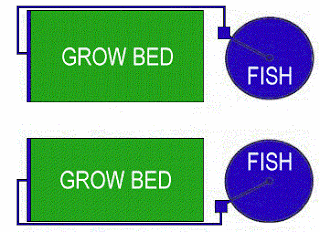
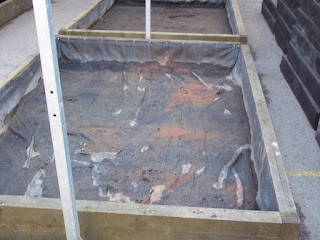
  • Place the grow bed right next to the aquarium or pond. Line the grow bed with pond foil the same length and width of the grow bed. Pour gravel on top of the pond foil in the grow bed. Cut a hole through the center of the grow bed and pond foil with the saw.
  • Place the water pump in the fish tank or pond and connect the water-in pipe to the pump.
     Pull the water-in pipe through the hole in the grow bed. Install the overflow drain into the grow bed and set it to a few inches above the height of the grow bed to prevent water from overflowing.
  • Fill the aquarium or pond with water and place plants into the gravel of the grow bed.
  •  
    CCRES AQUAPONICS special thanks to Zeljko Serdar for presentation of “How-To” module.

    Read More..

    Jumat, 01 April 2016

    It’s never late to start gardening. And if you are a starter growing beans is a very good option. Beans belong to the legume family. They are one of the few easiest vegetables to grow (Check out the entire list here). Some of the beans are grown for the seeds whereas some of them are grown for their pods (green beans) which can be served as vegetables. Here we will use the term beans to mean green beans in general.

    Ideal temperature of growing beans lies around 70 to 80 deg F. Put them in a place where you will receive at
    least 6 hours of sunlight. Mix some coconut coir or perlite along with the soil to increase its water retention and drainage capacity. Add a generous amount of compost with the soil before sowing the seeds. Being a member of the legume family, they will produce their own nitrogen. So while deciding on the composting ingredient you don’t need to add much of the ingredients which are very rich in nitrogen. You can find the list of minerals or plant nutrients in this article.

    The seeds are generally bigger in size than many vegetables. Ensure the seed is entirely covered (sow them one inch deep in the soil) by the soil. The best way is to keep at least 3 to 6 inch gap between two plants, to ensure proper growth.

    They are very fast growing plant. You can choose either the pole or the bush variety. Though the earlier one takes more time to mature it produce much more yield than the later. Bush variety is also self sufficient i.e. they don’t require any outside support. But in case the area is too windy, it is always recommended that you give them something to hold on to. If you are planning to grow pole variety then you have no choice but to give them trellis.

    Depending on your variety of the beans germination time will differ. Generally the bush type will germinate within a week whereas for a pole variety it might take couple of weeks. Water deeply, at least once in a week (to know more about how to water a plant click here). You can also use mulch to reduce the water loss from the soil.

    Harvesting of beans can be done everyday to encourage further fruit formation. The best time to pick them is when they are tender and before seeds become prominent. Pluck using your finger nails or scissors. You can eat them fresh or can incorporate in other dishes. You can also store them in refrigerators.


    Are you growing Beans? Share your experience with us.
    Read More..

    Senin, 21 Maret 2016

    Ive been waiting to receive a replacement color chart for measuring pH, Ammonia, Nitrate, and Nitrite levels.  I sent API $2 for a replacement, but its taking forever.  So, I ordered a new test kit from amazon.  Theyre marked down to ~$16 dollars from ~$20.  I can use this at home, since my other test kit is at Pogos apartment with his 105 gallon system.

    Also, I just received my pre-ordered AquaFarm from BacktotheRoots.com.  This is the most hyped aquaponic kit that was on Kickstarter recently.  Im excited to get a Betta fish tonight and get it set up.  Ill have an unboxing video, and a review of the system in the coming weeks.

    I also recently read an article about Aqua Vita farms in upstate New York.  Theyre one of the only commercial Aquaponic farms on the east coast.  Theyre looking for a buyer or investor, otherwise theyll have to close up shop in about a week.  Its a shame to see that they couldnt see profitable margins in their venture.  The owner, Mark Doherty, claimed that they had to redesign their system to make it more efficient and profitable.  However, they ran out of capital because of the redesign, and now they dont have enough money to stay afloat.  I hope them all the best, and I hope that I can someday meet Mark and learn from their experiences.  Heres a link to the article:  http://www.syracuse.com/news/index.ssf/2013/06/aqua_vita_farms_owner_we_need.html.
    Read More..

    Jumat, 18 Maret 2016


    The U.S. Department of Energy has just released this video to educate people on the research, industry and government’s efforts to develop biomass as an organic renewable energy source; employing agriculture and forest residues, energy crops, and algae to take the place of conventional fuels like gasoline, diesel, and jet fuel.
    CCRES Algae Team
    Read More..

    Kamis, 17 Maret 2016

    Generally I dont make these posts directly about me but on Monday something will start to happen that is, to me, beyond belief, and so I thought Id try to put into words what my allotment means to me. And why.
    Ive grown on various allotments since childhood. The seasonal processes of looking after the land, feeding it, digging and weeding it and growing food on it is part of who I am. And its not just because I love growing and eating fresh, local, organic food, although obviously that us part of it.
    Working the land grounds you. It soothes the soul and allows you to slow down, to feel the seasons in all their beauty and in all their extremes. Being in the plot on a really windy day listening to the trees creaking brings the realisation of how we are, and always will be, in natures hands. Feeling the soil, working it gently and caring for it in a way that you know will bring it into maximum fertility, slows you down and forces the ears and eyes to hear and see what your hands are feeling and your brain to process that in a way that makes you think about the seasons, about past experiences. The turning of the seasons, the seasonal produce and the repetition of all these things whilst looking after and caring for that land is a powerful thing and one that as the seasons and the years pass, we realise we only know a tiny amount about. 
    Sitting on the plot on a perfect summers day, listening to birdsong, watching the clouds as they pass, sowing seeds, potting plants on all with the heat of the sun on the back feels like a gentle caress. Talking to allotment neighbours, swapping plants and produce brings community to life. But even winter digging when the robin appears with every turned doc, looking for worms, makes you feel like someone or something powerful is pushing you on, willing you to succeed.
    Working the land soothes the soul. We know that there is a compound in soil that raises seratonin levels, meaning that anyone suffering from low mood genuinely will be helped by working the land. Horticultural therapy works, and mixed with the sense of community on a site raises the spirits. Good food, good company and a natural antidepressant has saved people from despair.
    And yet, as Monday approaches all of this is put into jeopardy. Trees that are wonderful for nesting birds and wildlife are bring felled as the horrors of a bus route that will cut 3 minutes off a journey, as long as traffic is clear, comes to life. 
    The sadness I feel today is beyond explanation. 
    Read More..

    Selasa, 15 Maret 2016


    Join us as we tackle the tough questions raised by the ongoing environmental catastrophe like one in the Gulf of Mexico. Topics will include mitigation of the spill and the impending cleanup efforts; energy alternatives; policy and economics; as well as new technology that can help us build a self-reliantculture.

     This people care about the ocean. 


    Sylvia EarleSylvia Earle, Mission Blue Read full bio

    Sylvia Earle, called “Living Legend” by the Library of Congress and “Hero for the Planet” by Time, is an oceanographer, explorer, author and lecturer with a deep commitment to research through personal exploration. Earle’s work has been at the frontier of deep ocean exploration for four decades. Earle has led more than 50 expeditions worldwide involving more than 6,000 hours underwater.

    Philippe CousteauPhilippe Cousteau, EarthEcho Read full bio

    Philippe Cousteau is the son of Jan and Philippe Cousteau Sr., and the grandson of Captain Jacques-Yves Cousteau. As a member of the legendary family, Philippe is continuing the work of his father through EarthEcho International, the non-profit organization he founded with his sister and mother and of which he serves as CEO. Philippe went diving into the Gulf oil spill, witnessing first hand the damage being done.

    David GalloDavid Gallo, Woods Hole Institution Read full bio

    Dave Gallo works to push the bounds of oceanic discovery. Active in undersea exploration, he was one of the first oceanographers to use a combination of manned submersibles and robots to map the ocean world with unprecedented clarity and detail. Gallo is now working with director James Cameron and other undersea experts on ideas to stop the oil spill.

    Susan ShawSusan Shaw, Marine Environmental Research Institute
    Read full bio

    Dr. Susan Shaw is an internationally recognized marine toxicologist, author, explorer, and founder/director of the Marine Environmental Research Institute. Shaw is applying her expertise to the Gulf catastrophe by launching an independent, region-wide investigation of the toxic impacts of oil and dispersants on marine life and human health.

    Andrew SharplessAndrew Sharpless, Oceana Read full bio

    Andrew Sharpless is the CEO of Oceana, the world’s largest international nonprofit dedicated to ocean conservation. A graduate of Harvard College, Harvard Law School, and the London School of Economics, Sharpless was one of the founding managers of RealNetworks, the Seattle-based pioneer in the field of online music and video play-back technology.

    Wolcott HenryWolcott Henry, Munson Foundation and Marine Photobank Read full bio

    For over 20 years, Mr. Henry has been president of The Curtis and Edith Munson Foundation, a private foundation that supports marine conservation with an emphasis on fisheries management, marine protected areas, and coral reefs. In addition, Mr. Henry is an accomplished underwater photographer. As a contract photographer for the National Geographic Society, he has collaborated with Sylvia Earle.

    Amory LovinsAmory Lovins, Rocky Mountain Institute Read full bio

    Amory Lovins is Chairman and Chief Scientist of the Rocky Mountain Institute. For four decades he has worked in energy policy and related areas. Lovins worked professionally as an environmentalist in the 1970s and since then as an analyst of a “soft energy path” for the United States and other nations. Time magazine named Lovins as one of the world’s 100 most influential people.

    Phil RadfordPhil Radford, Greenpeace Read full bio

    Phil Radford is the Executive Director of Greenpeace USA. He has a background in grassroots organizing, campaign planning, and energy policy. As Grassroots Director, it was Phil’s vision and leadership that built Greenpeace’s $9 million Grassroots Program and our cutting edge online to on-the-ground organizing, as well as a robust student organizing and training program.

    Carl SafinaCarl Safina, Blue Ocean Institute Read full bio

    Dr. Carl Safina is a prominent ecologist and marine conservationist and president of Blue Ocean Institute, an environmental organization based in Cold Spring Harbor, New York. He has also been a recreational fisherman since childhood. A winner of the prestigious Pew Fellowship, MacArthur Fellowship and Guggenheim Fellowship, Safina has written five books.

    Reid DetchonReid Detchon, UN Foundation Read full bio

    Reid Detchon is Vice President for Energy and Climate at the United Nations Foundation. He is also the executive director of the Energy Future Coalition, a broad-based non-partisan public policy initiative supported by the UN Foundation that seeks to bring about change in U.S. energy policy to address critical challenges related to the production and use of energy.

    Ronald AtlasRonald Atlas, University of Louisville Read full bio

    Dr. Ronald Atlas pioneered the field of bioremediation and showed that fertilizer application can hasten the rates of oil removal following oil spillages. He has worked on several major oil spills, including the Amoco Cadiz spill in Brittany, the IXTOC-1 spill in the Gulf of Mexico, the Exxon Valdez spill in the Gulf of Alaska, and the Kuwait oil spill following the first Gulf War.

    Jigar ShahJigar Shah, Carbon War Room Read full bio

    A renowned visionary committed to renewable energy, Jigar Shah launched SunEdison in 2003 based upon a business plan he developed in 1999. That plan became the basis of the SunEdison model: Simplify solar as a service. Shah was tapped by Virgin mogul Richard Branson to head up the Carbon War Room, which harnesses the power of entrepreneurs to implement market-driven solutions to climate change.

    John FrancisJohn Francis, Planetwalk, National Geographic Read full bio

    In the early 1970s John Francis gave up using motorized vehicles after witnessing the devastating effects of an oil spill in San Francisco Bay. Soon afterwards he took an even more radical step: a vow of silence that lasted 17 years, during which he undertook a pilgrimage by foot across America on behalf of the environment and world peace, earning a Ph.D. in environmental studies along the way.

    Darron CollinsDarron Collins, World Wildlife Fund Read full bio

    Dr. Darron Collins joined WWF in 2001. A cultural anthropologist and an expert in ethnobotany, Darron has designed and implemented human-centered conservation programs for WWF in Latin America, Russia, China and Mongolia. His most recent endeavors involve using creative media to share WWF’s work with new, influential audiences and use storytelling to drive conservation on the ground.

    Mike MendezMike Mendez, Sapphire Energy Read full bio

    Mike Mendez has held a number of top industry positions at the forefront of the molecular biology revolution. In addition to serving as Director of Bioengineering at GenWay, Mr. Mendez was also associate director of Exploratory Research at Takeda Pharmaceuticals. There he established a new department that focused on novel platforms for over-expression, purification, and crystallization of membrane proteins.

    Jackie SavitzJackie Savitz, Oceana Read full bio

    Jackie Savitz is Campaign Director and Senior Scientist for Oceana’s Pollution Campaigns. She has shaped and led campaigns and projects dealing with global warming pollution from ships, mercury contamination of fish, and cruise ship pollution among other issues. Savitz has a background in marine biology and environmental toxicology combined with more than fifteen years of policy analysis experience.

    Jim GeringerJim Geringer, ESRI Read full bio

    Jim Geringer was elected as Wyoming’s 30th governor in 1994 and completed his second term in January 2003. His advocacy for technology in government has centered on the end result of using technology to enhance citizen services. That advocacy has led Jim to join in a full-time capacity with Environmental Systems Research Institute (ESRI) the top provider of geographic information systems software.

    Lisa MargonelliLisa Margonelli, New America Foundation Read full bio

    Lisa Margonelli writes about the global culture and economy of energy. Her book about the oil supply chain, Oil On the Brain: Petroleum’s Long Strange Trip to Your Tank, was published by Nan Talese/Doubleday in 2007. Recognized as one of the 25 Notable Books of 2007 by the American Library Association, Oil On the Brain also won a 2008 Northern California Book Award for general nonfiction.

    Mike TidwellMike Tidwell, Chesapeake Climate Action Network Read full bio

    Mike Tidwell is founder and director of the Chesapeake Climate Action Network, a grassroots nonprofit dedicated to raising awareness about the impacts and solutions associated with global warming in Maryland, Virginia, and DC. He is also an author and filmmaker. Tidwell received the Audubon Naturalist Society’s prestigious “Conservation Award.”

    Casey DeMoss RobertsCasey DeMoss Roberts, Gulf Restoration Network Read full bio

    Casey DeMoss Roberts works to develop and implement water resource campaigns and advance GRN public policy positions through public education and mobilization, including organizing outreach events and workshops. Casey has worked on climate and energy related issues for several years with both national and regional groups.

    Diarmuid OConnellDiarmuid O’Connell, Tesla Motors Read full bio

    Diarmuid joined Tesla in 2006, and currently serves as the Vice President of Business Development in which capacity he manages commercial relationships and all aspects of government affairs. Before joining Tesla, Diarmuid served as Chief of Staff for Political Military Affairs at the US State Department, where he was involved in policy and operational support to the U.S military in various theaters of operation.

    Klaus LacknerKlaus Lackner, Columbia University Read full bio

    Klaus Lackner is the Ewing Worzel Professor of Geophysics at Columbia University, where he is also the Director of the Lenfest Center for Sustainable Energy, the Chair of the Department of Earth and Environmental Engineering, and a member of the Earth Institute faculty.
    .

    David JohnsonDavid Johnson, Institute of Maritime History Read full bio

    David Johnson is a professor at American University, former director and board member of the Institute of Maritime History, a non-profit dedicated to the preservation and documentation of archaeological remains related to maritime history. The IMH is currently working in the Gulf on mitigating the effects of the disaster on submerged cultural resources, namely underwater archaeological sites and historical shipwrecks.

    Christen LienChristen Lien, Violist and Composer Read full bio

    Using guitar effects and a looping machine, classically trained violist Christen Lien performs original compositions on viola. Spontaneously creating then incorporating layers of live effects, Lien paints music with guitar effect pedals, live looping, melodic mixing and expressive performance. For TEDxOilSpill, Lien will debut a song inspired by her recent trip to the Gulf Coast, in response to the oil spill.

    Leroy StickElizabeth Coffman, Ted Hardin,
    Long Distance Productions Read full bio

    Elizabeth Coffman and Ted Hardin are filmmakers who have recorded the environmental crisis in southern Louisiana for the last seven years. Working with Louisiana poet Martha Serpas, their documentary, “Veins in the Gulf,” highlights the community of scientists, engineers and artists trying to save the productive bayou region.

    Leroy StickLeroy Stick, @BPGlobalPR Read full bio

    Leroy Stick is the pseudonymous humorist behind @BPGlobalPR, the Twitter account that has satirized BP’s statements to the public and in the process, given a way for those frustrated by the oil spill to vent their anger with humor. He has over 160,000 followers on Twitter and continues to spread satire in order to raise awareness to the actions of BP and those responding to the spill.

     Do you care? 
    Join the conversation. 
    Write your vision.

    CCRES 
    Read More..